Domain eisenbahn-waggons.de kaufen?
Wir ziehen mit dem Projekt
eisenbahn-waggons.de um.
Sind Sie am Kauf der Domain
eisenbahn-waggons.de interessiert?
domain@kv-gmbh.de · 0541-91531010
Domain eisenbahn-waggons.de kaufen?
Cake or fake?
It depends on the context. If you are asking about a choice between eating cake or something that is not real, then cake would be the preferred option. However, if you are asking about the authenticity of something, then fake would imply that it is not genuine or real. **
Travelling or traveling?
Both "travelling" and "traveling" are correct spellings of the word, but they are used in different regions. "Travelling" is more commonly used in British English, while "traveling" is more commonly used in American English. **

Ähnliche Suchbegriffe für OR
Top-Angebote
Produkte zum Begriff OR:
-
Teddies Zug und 2 Waggons OzeanModellzug - material holz, manuelle Steuerung, mechanisch, zusammenlegbar, Abmessungen: 38 × 8 × 12 cm (L×B×H), geeignet ab 1 Jahr The Teddies wooden train with an ocean theme is a motor skills toy designed for children from one year old. It consists of a locomotive and two carriages, onto which the individual pieces a19,59 €*Versand: 4,99 €Sichere Weiterleitung zum Anbieter
-
goki Fädelzug, Lokomotive mit 5 Waggons mit verschiedenen FormenEin ganz besonders raffiniertes Geschicklichkeitsspiel aus Holz: Die Lok kommt mit 5 Anhängern in verschiedenen Formen daher - diese müssen jeweils durch das richtige Gegenstück geführt werden, damit es der komplette Zug auf die andere Seite schafft. Übt die Feinmotorik und das Verständnis für Formen und räumliches Denken.9,89 €*Versand: 4,99 €Sichere Weiterleitung zum Anbieter

-
Will or gonna?
"Will" and "gonna" are both used to express future actions, but there are slight differences in their usage. "Will" is more formal and is used in more formal situations, while "gonna" is a more informal and colloquial way of expressing future actions. **
-
Do or does?
The choice between "do" and "does" depends on the subject of the sentence. "Do" is used with plural subjects and "does" is used with singular subjects. For example, "They do their homework" and "She does her homework." **
-
Anyway or anyways?
Both "anyway" and "anyways" are commonly used in spoken English to mean the same thing. However, "anyway" is more widely accepted and considered to be the standard form. "Anyways" is often considered to be more informal or colloquial. **
-
Doesn't or don't?
The correct form to use depends on the subject of the sentence. "Doesn't" is used with singular subjects, while "don't" is used with plural subjects. For example, "He doesn't like coffee" (singular subject) and "They don't like coffee" (plural subject). **
Gucci or Prada?
That is a subjective question and it depends on personal preference. Both Gucci and Prada are luxury fashion brands known for their high-quality products and unique designs. It ultimately comes down to individual style and taste. **
Do or make?
The choice between "do" and "make" depends on the context and the specific action being referred to. "Do" is generally used for activities or actions that involve performing or carrying out something, while "make" is used for creating or producing something tangible. For example, you would say "do your homework" but "make a cake." **
Top-Angebote
Produkte zum Begriff OR:
-
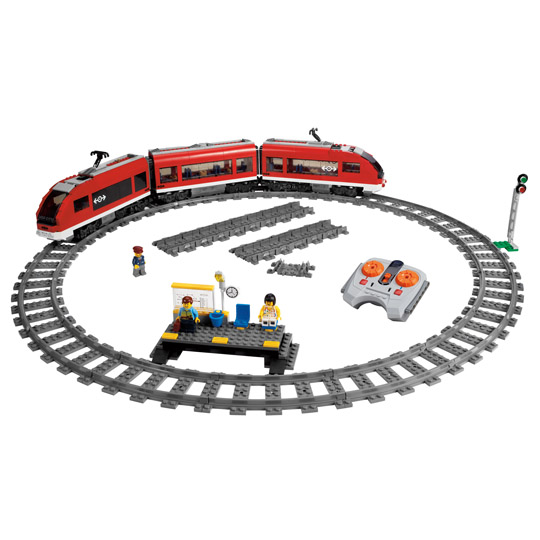
Lego City 7938 Passagierzug Eisenbahn Mit Fernsteuerung Personenzug Zug GleiseLEGO CITY 7938 - Passagierzug Motto: Der neue Hochgeschwindigkeitspersonenzug bringt seine Passagiere in Höchstgeschwindigkeit zu ihrem Ziel! Dank der innovativen Infrarot-Fernsteuerung mit vier Frequenzen und sieben Geschwindigkeitsstufen können bis zu acht Wagons gleichzeitig durch die engen Kurven der neuen flexiblen Gleise gesteuert werden.Eigenschaften:Enthält Lok und 2 Personenwaggons mit abnehmbaren Dächern und Platz für 10 FahrgästeCockpit der Lok kann geöffnet werdenSet enthält drei Minifiguren: 1 Zugführer und 2 PassagiereInklusive 1 Ampel, 1 Bahnhofswartehäuschen, 16 gebogenen Schienenstücken und 16 flexiblen Schienenstücken, mit denen Kurven und gerade Strecken gebaut werden könnenIst mit allen Gleisen aus der LEGO City Reihe kompatibelMit LEGO Power Functions-Batteriebox, Bahnmotor, Infrarot-Empfänger und Infrarot-Fernsteuerung mit vier Frequenzen und sieben GeschwindigkeitsstufenFernsteuerung kann 8 verschiedene Züge gleichzeitig bedienenZug ist 69 cm langLEGO-Nr.: 7938LE347,95 €*Versand: 0,00 €Sichere Weiterleitung zum Anbieter
-
Teddies Zug und 2 Waggons OzeanModellzug - material holz, manuelle Steuerung, mechanisch, zusammenlegbar, Abmessungen: 38 × 8 × 12 cm (L×B×H), geeignet ab 1 Jahr The Teddies wooden train with an ocean theme is a motor skills toy designed for children from one year old. It consists of a locomotive and two carriages, onto which the individual pieces a19,59 €*Versand: 4,99 €Sichere Weiterleitung zum Anbieter
-
Cake or fake?
It depends on the context. If you are asking about a choice between eating cake or something that is not real, then cake would be the preferred option. However, if you are asking about the authenticity of something, then fake would imply that it is not genuine or real. **
-
Travelling or traveling?
Both "travelling" and "traveling" are correct spellings of the word, but they are used in different regions. "Travelling" is more commonly used in British English, while "traveling" is more commonly used in American English. **
-
Will or gonna?
"Will" and "gonna" are both used to express future actions, but there are slight differences in their usage. "Will" is more formal and is used in more formal situations, while "gonna" is a more informal and colloquial way of expressing future actions. **
-
Do or does?
The choice between "do" and "does" depends on the subject of the sentence. "Do" is used with plural subjects and "does" is used with singular subjects. For example, "They do their homework" and "She does her homework." **
Ähnliche Suchbegriffe für OR
-
goki Fädelzug, Lokomotive mit 5 Waggons mit verschiedenen FormenEin ganz besonders raffiniertes Geschicklichkeitsspiel aus Holz: Die Lok kommt mit 5 Anhängern in verschiedenen Formen daher - diese müssen jeweils durch das richtige Gegenstück geführt werden, damit es der komplette Zug auf die andere Seite schafft. Übt die Feinmotorik und das Verständnis für Formen und räumliches Denken.9,89 €*Versand: 4,99 €Sichere Weiterleitung zum Anbieter
-
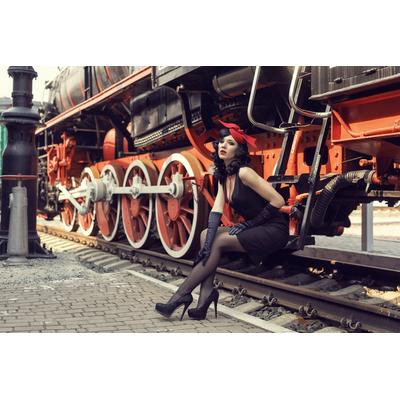
Fototapete PAPERMOON "EISENBAHN-LOKOMOTIVE ZUG BAHNGLEISE RETRO DESIGN MODEL", bunt, B:4m L:2,6m, Vlies, TapetenVliestapete, EISENBAHN-LOKOMOTIVE ZUG BAHNGLEISE RETRO DESIGN MODEL, Poster, Dekoration, Landschaft, Stadt, Stilleben, verschiedene Größen von 2m- 10m Breite, wählen Sie Ihre Größe, Optik/Stil: Farbbezeichnung: bunt, Material: Materialeigenschaften:...116,99 €*Versand: 5,95 €Sichere Weiterleitung zum Anbieter
-
Fototapete PAPERMOON "VINTAGE ZUG-LOKOMOTIVE EISENBAHN DESIGN WANDTAPETE XXL", bunt, B:4m L:2,6m, Vlies, TapetenVliestapete, VINTAGE ZUG-LOKOMOTIVE EISENBAHN DESIGN WANDTAPETE XXL, Poster, Dekoration, Landschaft, Stadt, Stilleben, verschiedene Größen von 2m- 10m Breite, wählen Sie Ihre Größe, Optik/Stil: Farbbezeichnung: bunt, Material: Materialeigenschaften:...116,85 €*Versand: 5,95 €Sichere Weiterleitung zum Anbieter
-
Anyway or anyways?
Both "anyway" and "anyways" are commonly used in spoken English to mean the same thing. However, "anyway" is more widely accepted and considered to be the standard form. "Anyways" is often considered to be more informal or colloquial. **
-
Doesn't or don't?
The correct form to use depends on the subject of the sentence. "Doesn't" is used with singular subjects, while "don't" is used with plural subjects. For example, "He doesn't like coffee" (singular subject) and "They don't like coffee" (plural subject). **
-
Gucci or Prada?
That is a subjective question and it depends on personal preference. Both Gucci and Prada are luxury fashion brands known for their high-quality products and unique designs. It ultimately comes down to individual style and taste. **
-
Do or make?
The choice between "do" and "make" depends on the context and the specific action being referred to. "Do" is generally used for activities or actions that involve performing or carrying out something, while "make" is used for creating or producing something tangible. For example, you would say "do your homework" but "make a cake." **
* Alle Preise verstehen sich inklusive der gesetzlichen Mehrwertsteuer und ggf. zuzüglich Versandkosten. Die Angebotsinformationen basieren auf den Angaben des jeweiligen Shops und werden über automatisierte Prozesse aktualisiert. Eine Aktualisierung in Echtzeit findet nicht statt, so dass es im Einzelfall zu Abweichungen kommen kann. ** Hinweis: Teile dieses Inhalts wurden von KI erstellt.